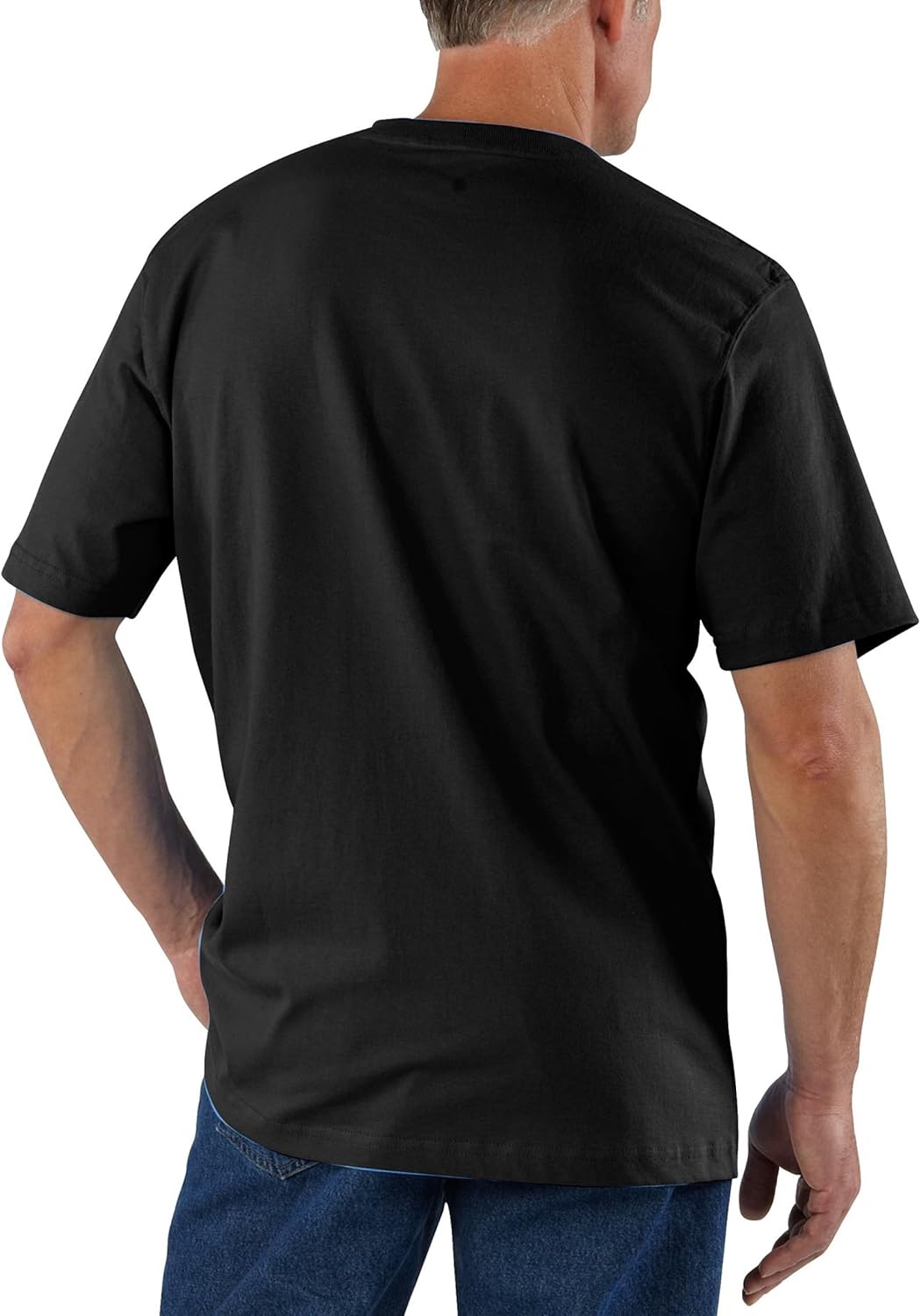
The pocket tee — that’s just a regular crew-neck t-shirt with a small patch pocket stitched to the left chest — has a reputation problem. It gets filed under “dad shirt” or “gas station attendant” by people who haven’t thought about it much, and ignored entirely by buyers chasing minimalist basics. That’s a mistake. The chest pocket is one of the oldest functional details in American casualwear, and when a brand executes it well — with the right fabric weight (how thick and substantial the cloth feels), proper hem tension, and a pocket that actually lies flat — the result is a shirt that looks intentional rather than accidental. This guide breaks down the pocket tee tier by tier, from Carhartt’s workhorse cotton to the quieter heritage options sitting closer to the $100 mark, so you can match the right shirt to your actual use case.
Why the Pocket Tee Keeps Coming Back
The chest pocket on a t-shirt isn’t a stylistic accident. Workwear manufacturers added it for function — a place for a pencil, a lighter, a folded note. That utility-first DNA is exactly why the pocket tee reads as grounded rather than fussy. Put This On, a long-running menswear editorial site, has noted that the pocket tee succeeds precisely because it resolves the “too casual, not casual enough” gap that a plain crewneck sometimes creates — the pocket adds visual structure without adding formality.
What makes it a practitioner-level purchase decision is that the pocket is also where construction quality reveals itself fastest. A poorly attached pocket puckers at the corners after two washes. The fabric pulls at the hem if the weight (measured in GSM — grams per square meter, a standard industry spec for how thick the cloth is) is mismatched between the pocket piece and the body. A well-made pocket tee, by contrast, lies perfectly flat through heavy rotation. The difference is immediately visible.
The market right now splits into three meaningful tiers, each with a different value proposition and a different buyer profile.
Tier 1: The Workwear Anchor ($15–$35)
If you’ve worked a job site, driven a truck, or spent real time outdoors, you’ve probably worn this shirt. The Carhartt K87 is built from a 6.75 oz (roughly 229 GSM) ring-spun cotton — ring-spun means the fibers are twisted together more tightly during spinning, which produces a stronger, smoother yarn than standard open-end cotton. Owners consistently report that the K87 holds its shape across dozens of washes in a way that similarly priced shirts don’t. The pocket is wide enough to actually use, reinforced at the corners, and the hem is heavy enough that it doesn’t curl.
The tradeoff: this is a work shirt first. The fabric is substantial to the point of feeling stiff in the first few washes, and the fit is relaxed-boxy by design. If you’re buying it as a layering piece or a casual weekend tee, the cut can read blocky unless you’re intentional about sizing down.
Fruit of the Loom / Hanes Comparable Blanks
At the $12–$18 tier, these are the blanks that screen printers and small-batch creatives know well. The pocket versions — Hanes Beefy-T Pocket, Fruit of the Loom Eversoft — run lighter at 5–6 oz (roughly 170–200 GSM). They’re workable, widely available, and consistent enough for branded merchandise. For personal wardrobe use, though, the fabric is thin enough that the pocket puckers on most units within a few months of regular wear. Reviewers across aggregated retail reviews consistently flag pocket alignment and hem rollup as the first failure points.
Decision rule for Tier 1: If you need shirts for physical work, outdoor use, or high-volume printing orders, the Carhartt K87 wins without much contest. If you’re buying for casual daily wear and the budget genuinely stops at $20, go Hanes Beefy-T and treat them as a consumable you’ll replace annually.
Tier 2: The Wardrobe Builder ($35–$80)
This is where the pocket tee gets interesting. At this price range, you’re buying into better cotton sourcing, tighter garment construction, and fit that was actually designed rather than defaulted to.
Gitman Brothers Vintage Pocket Tee
Gitman’s tees come in around 7 oz (235–240 GSM) in a combed cotton — combed cotton goes through an additional processing step that removes short fibers and straightens the remaining ones, which produces a smoother hand-feel and a longer-wearing garment. Reviewers at outlets including GQ and Mr Porter’s editorial journal have cited the Gitman pocket tee as one of the better mid-range options for buyers who want workwear heritage without the boxy silhouette. The pocket is slimmer and more refined than Carhartt’s — still functional, but clearly designed for the chest of a fitted shirt rather than a uniform.
Velva Sheen (via US stockists)
Velva Sheen is a Cincinnati-based manufacturer that’s been making tees since 1932 and has developed a serious following among heritage and Americana enthusiasts — Highsnobiety’s coverage of heritage workwear brands has repeatedly flagged Velva Sheen as one of the last American manufacturers producing at this price point with genuine domestic production integrity. Their 2-pack pocket tee format is a practical buy: the fabric runs slightly lighter than Gitman (around 5.5–6 oz) but the tube-knit construction (where the body is knit as a continuous cylinder without side seams) is notable for producing a cleaner drape and fewer stress points.
Nautica occupies an interesting position here. The brand’s core pocket tees — available in their basic and vintage-wash lines — have benefited from a quiet quality improvement across the past several seasons. Owners in long-run reviews note that the garment-dyed versions in particular age well, with the pocket patch softening at a similar rate to the body fabric, which prevents the visual mismatch you get when a pocket remains stiff after the surrounding fabric has broken in. At $30–$50 depending on colorway and retailer, Nautica is probably the best value for a buyer who wants a lifestyle-casual pocket tee without venturing into heritage-brand territory.
By the numbers — Tier 2 comparison:
| Brand | Weight | Cotton Spec | Pocket Construction | Price Range |
|---|---|---|---|---|
| Gitman Brothers Vintage | ~7 oz (240 GSM) | Combed cotton | Slim, fitted chest | $55–$75 |
| Velva Sheen | ~5.5–6 oz (190–200 GSM) | Tube-knit, US-made | Traditional width | $30–$50 (2-pack) |
| Nautica (garment-dyed) | ~5.8 oz (195 GSM) | Standard ring-spun | Soft, aged-in | $30–$50 |
Decision rule for Tier 2: If fit matters more than heritage provenance, start with Gitman or Nautica. If country of origin and manufacturing lineage matter to you — or if you’re sourcing blanks for a project where “Made in USA” is a selling point — Velva Sheen is the clearest answer at this price.
Tier 3: The Considered Purchase ($80–$160+)
Merz b. Schwanen 215 Pocket Tee
Merz b. Schwanen is a German label that revived antique loopwheel machines — slow-running, low-tension knitting equipment that produces a fabric with more loft and elasticity than modern high-speed knitting. The 215 pocket tee runs around 7.5–8 oz and is among the heavier options at this tier. Owners consistently describe the fabric as having a distinct “fullness” that doesn’t flatten out after washing — a characteristic that loopwheel construction produces by preserving air between yarn fibers. The pocket on the 215 is set at a traditional workwear position and width, true to the brand’s early 20th-century reference point.
The tradeoff at this price: the cut is relatively boxy and the fabric takes several washes to fully soften. You’re buying into process and provenance, not instant gratification.
Sunspel Pocket Tee (Sea Island Cotton)
Sunspel’s pocket tees in Sea Island cotton — a rare variety grown in limited quantities primarily in the Caribbean, known for its exceptionally long fiber length and silky feel — sit closer to $130–$160 depending on retail channel. The Business of Fashion has documented how long-fiber cotton varieties like Sea Island and Supima command premium pricing because their longer staple length (the individual fiber length before spinning) allows for finer, stronger yarn. The Sunspel pocket version is less common than their standard crewneck, but owners who have tracked it report that the fabric’s natural sheen makes the chest pocket read as a design detail rather than a utility afterthought.
Decision rule for Tier 3: The Merz b. Schwanen 215 is the right call if your wardrobe skews toward heavyweight, aged-in American and Japanese workwear references and you’re comfortable with a break-in period. The Sunspel is correct if you want the pocket tee to function in slightly smarter casual settings — where the fabric quality signals intention without the shirt needing to be “a thing.”
The Construction Details That Actually Matter
Across all tiers, three specs separate a pocket tee that lasts from one that disappoints:
1. Pocket attachment method. A pocket attached with chain-stitch construction (a specific type of stitch that interlocks in a chain, common on heritage American garments) has more give and resists puckering better than a standard lockstitch pocket. Chain-stitch is a reliable marker of heritage construction; it’s also why old Carhartt and Velva Sheen shirts from the 1980s are still structurally intact in vintage markets.
2. Fabric weight parity between pocket and body. This is the detail that kills otherwise fine shirts. When a manufacturer cuts costs by using a different (usually lighter) fabric for the pocket piece, the pocket behaves differently than the body — shrinking at a different rate, sitting differently against the chest. Textile Exchange’s fiber reports note that garment consistency requires matched lot dyeing and weight parity across components; in practice, this standard is more reliably met at the $40+ tier.
3. Hem and cuff construction. A double-needle hem (two rows of parallel stitching at the bottom edge) resists curling and outlasts single-needle finishes by a significant margin. It’s a baseline spec you should confirm — or rule out — before buying anything you expect to wear for more than a season.
If X, Then Y: The Decision Framework
- If you need durability above all else and price is your primary constraint: Carhartt K87. Full stop.
- If you want a daily-wear pocket tee in the $30–$50 range and fit matters more than provenance: Nautica garment-dyed or Velva Sheen 2-pack.
- If you’re sourcing blanks for custom work and “Made in USA” matters to your customer: Velva Sheen is still one of the only credible options at this price point.
- If you’re building a considered wardrobe and willing to wait for the break-in: Merz b. Schwanen 215.
- If you need the pocket tee to work across more dressed-up casual contexts: Sunspel Sea Island is the pick — the fabric earns its place.
The pocket tee has been functional American casualwear for over a century. The brands that execute it best haven’t changed dramatically; what’s changed is how easy it is to find them and what to look for when you do.