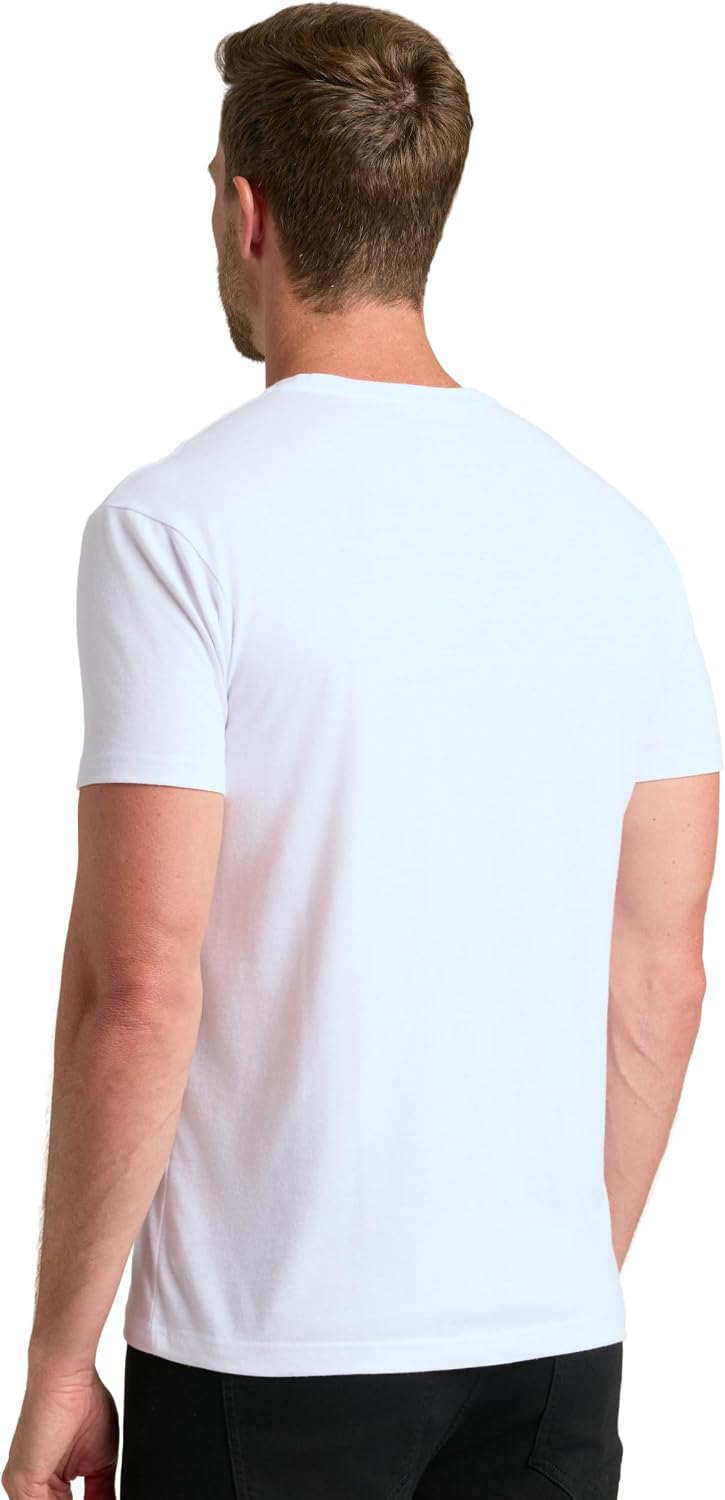
There’s a version of this decision that feels simple: you need a good t-shirt, you’ve heard these three names, and you want to know which one to buy. But once you start digging — checking fabric weights, reading the fine print on cotton sourcing, comparing how each brand’s sizing actually behaves across a wash cycle or two — the choice gets more interesting. This article compares True Classic, Polo Ralph Lauren, and Calvin Klein across the variables that actually matter: fabric quality, fit consistency, durability, and price-to-value at each tier. We’ll also flag what each brand is quietly trading off so you can match the pick to your actual use case, not just the marketing.
If you’re new to thinking about t-shirts this way: “fabric weight” refers to how heavy the knitted fabric feels, usually measured in grams per square meter (GSM) — higher numbers mean a thicker, more structured tee. “DTC” stands for direct-to-consumer, meaning the brand sells straight to you online without a retail middleman, which theoretically lets them put more money into the garment. We’ll explain everything else as we go.
What You’re Actually Paying For at Each Price Point
Before comparing brands head to head, it helps to understand what the market actually looks like in 2025–2026. These three brands don’t occupy the same tier — they’re spread across a meaningful price range that reflects genuinely different production choices.
By the numbers:
| Brand | Typical crew-neck tee price | Cotton claim | Primary channel |
|---|---|---|---|
| True Classic | $20–$30 (often in multipacks) | Cotton/poly blend or 100% cotton, varies by line | DTC online |
| Calvin Klein | $25–$45 (retail / department store) | Cotton or modal blends | Wholesale + DTC |
| Polo Ralph Lauren | $45–$85 (depending on line) | Mostly ring-spun cotton; some Pima SKUs | Wholesale + DTC + outlet |
The price spread here isn’t incidental. It reflects different cotton grades, different construction standards, and very different marketing budgets being baked into cost.
What the Business of Fashion’s 2024 analysis of DTC brands describes as “the basics war” — the competitive pressure on digitally native brands to underprice legacy wholesale labels — shows up clearly in True Classic’s positioning. They win on accessibility and volume. The question is whether the garment keeps pace.
True Classic: The DTC Math, Examined
True Classic has built an impressive brand on a straightforward premise: well-fitted tees at aggressive prices, marketed directly through social channels. Across aggregated owner reviews, the pattern is consistent — buyers respond to the fitted silhouette, especially around the chest and shoulders, and appreciate that the brand communicates sizing in plain language (chest measurements, not just S/M/L abstractions).
But the fabric story is where you need to read carefully. True Classic’s standard tees use a cotton-polyester blend (the exact ratio has shifted across product generations), and published spec sheets on their site are not always forthcoming about GSM. Reviewers at Esquire and GQ have noted that True Classic tees tend to run lighter — around 160–180 GSM is the commonly cited estimate based on owner comparisons — which puts them in “warmer-weather layering piece” territory rather than “standalone substantial tee.”
What owners report: The fitted cut is the main draw, and it genuinely delivers for buyers who find standard-fit tees boxy. Shrinkage after washing is the most commonly cited complaint across review aggregators — owners frequently report dropping at least half a size after the first few washes, particularly in the length. The polyester content helps the shirt retain its shape structurally, but it also means breathability and aging (the way the fabric softens and develops character over time) are not strengths.
The tradeoff, named explicitly: You’re trading fabric quality and longevity for fit precision and price. If you’re buying multipacks for gym use, travel, or as an undergarment layer, that trade is completely sensible. If you’re buying a True Classic tee as a wardrobe staple you expect to wear twice a week for two years, the math gets shakier.
If X, then Y: If your priority is a fitted silhouette at under $30 and you replace basics regularly anyway, True Classic delivers. If you want a tee that improves with age and holds its dimensions across 50+ washes, keep reading.
Calvin Klein: The Department-Store Baseline, Reassessed
Calvin Klein occupies a strange middle ground in this comparison. The brand name carries enormous recognition — and with it, a pricing premium that can obscure what you’re actually buying. Calvin Klein’s t-shirt line has fragmented significantly over the years, with different quality tiers sold through different channels: the version at a department store is often not the same garment as the one through their DTC site, and outlet product is a different story again.
At the $25–$45 price point for a standard crew neck, Calvin Klein is mostly selling cotton jersey in the 160–190 GSM range, with some lines incorporating modal (a plant-derived fiber known for softness and drape) or elastane for stretch. Highsnobiety’s 2024 ranking of basics brands described Calvin Klein’s tee lineup as “competent but unremarkable at full price” — a fair summary of the aggregated reviewer consensus.
What owners report: Calvin Klein tees are consistently described as soft out of the box, with good initial drape. The modal-blend options (marketed under their CK One and similar sub-lines) hold up particularly well in terms of softness over time. Pure cotton SKUs, however, receive more mixed feedback on durability — pilling and collar stretch appear more frequently in long-term owner reviews than you’d hope at this price.
The brand premium question: Here’s where the math gets uncomfortable. A meaningful portion of what you’re paying at Calvin Klein’s full retail price is logo equity, not fabric quality. At $40 for a standard cotton tee, you’re not getting noticeably better construction than what’s available from more fabric-focused brands at the same price. The Textile Exchange’s 2024 Preferred Fiber & Materials Market Report notes that modal and TENCEL blends are increasingly cost-competitive for brands at this tier, which means the softness you feel in a CK modal tee is a genuine material advantage — but it’s not exclusive to Calvin Klein.
The tradeoff, named explicitly: Calvin Klein’s value proposition depends heavily on where you buy and which line you’re buying. The modal blends are legitimately good for the price. The standard cotton tees at full department-store retail are mostly paying for a brand name on the label.
If X, then Y: If you want a soft, drapey tee and you catch Calvin Klein’s modal line on sale (which happens frequently through their DTC channel and at department stores), you’re getting real value. At full retail for a standard cotton SKU, you’re overpaying relative to what the fabric warrants.
Polo Ralph Lauren: The Legacy Brand’s Honest Ledger
Polo Ralph Lauren is the most complicated brand in this comparison because the quality range within the label is genuinely wide. The Polo line — the $45–$85 crew necks and pocket tees sold through department stores, their own retail, and online — occupies a different tier than the Purple Label or RRL products. We’re focused on the mainline Polo tees here, because that’s where most buyers interact with the brand.
Published specs on Polo’s standard cotton tees point to ring-spun cotton construction, which refers to a spinning process that produces a smoother, stronger yarn than open-end (carded) cotton. GQ’s 2025 guide to white t-shirts notes Polo Ralph Lauren as a reliable recommendation for buyers who want a classic American fit with above-average fabric feel at a mid-range price. Esquire’s 2025 roundup echoes the same — editors there consistently return to Polo as a “safe bet” at this tier.
What owners report: The most consistent owner feedback on Polo mainline tees is that the cotton feels noticeably more substantial than mass-market alternatives — the hand feel (how it feels to the touch) is a genuine differentiator. Owners also report strong wash durability: collars hold their shape better than the Calvin Klein standard cotton line, and the fabric doesn’t thin out as quickly after repeated washing. The fit, however, is a point of contention — Polo’s classic fit is genuinely boxy by contemporary standards, and their “custom fit” runs small inconsistently across colors.
The sourcing transparency gap: Polo doesn’t publish detailed cotton sourcing information at the mainline tier. The Textile Exchange’s 2024 report highlights that brand-level fiber disclosure remains inconsistent across the mid-premium segment, and Polo is no exception. You’re largely trusting the brand’s quality control history rather than verified fiber specifications.
The tradeoff, named explicitly: At $45–$65, Polo’s mainline tee offers genuinely better cotton construction than both True Classic and Calvin Klein’s standard line — but you’re also paying for the pony logo, and the fit is polarizing enough that sizing uncertainty is a real cost if you’re buying blind.
If X, then Y: If you want a substantial cotton tee with good wash longevity and you’re comfortable with a more traditional American fit (or you’ve confirmed your size in person), Polo Ralph Lauren’s mainline tees are the best pure fabric story in this three-way comparison. If the fit doesn’t work for your build, or if you need a contemporary slim silhouette, the brand’s strengths don’t fully translate.
The Decision Frame: Matching the Brand to the Job
After mapping these three against each other, the honest answer is that they’re optimized for different buyers — and the mistake most people make is treating “premium” as a single category rather than a signal that needs decoding.
True Classic wins on fitted silhouette and accessible price. It’s the right call for buyers who prioritize cut over longevity and who are comfortable with a blend fabric. Don’t expect it to be your drawer’s last word on a great tee — expect it to be a solid, wearable option that you’ll eventually replace.
Calvin Klein wins narrowly in one scenario: the modal or modal-blend SKUs, bought on promotion. The standard cotton line at full retail is the weakest value proposition of the three. The brand’s name is doing more work than its fabric at those price points.
Polo Ralph Lauren wins on fabric substance and wash durability at the mid-range tier — but only if the fit works for your body and you’re paying mainline prices, not outlet markups on older stock. For a buyer who wants a tee that actually gets better with repeated washing and doesn’t lose its structure, this is the most defensible spend of the three.
The broader pattern worth holding onto: at this tier ($20–$85), you’re still in a zone where marketing budgets are a meaningful part of what you’re buying. The brands that offer genuine fabric differentiation — ring-spun cotton at real weight, consistent sizing, verifiable sourcing — are worth finding, even if they don’t have the name recognition. Highsnobiety’s 2024 basics rankings include several independent and heritage labels that outperform all three brands discussed here on pure fabric merit at comparable or lower prices. That’s a different article. But it’s worth knowing the ceiling in this comparison isn’t as high as the brand names imply.